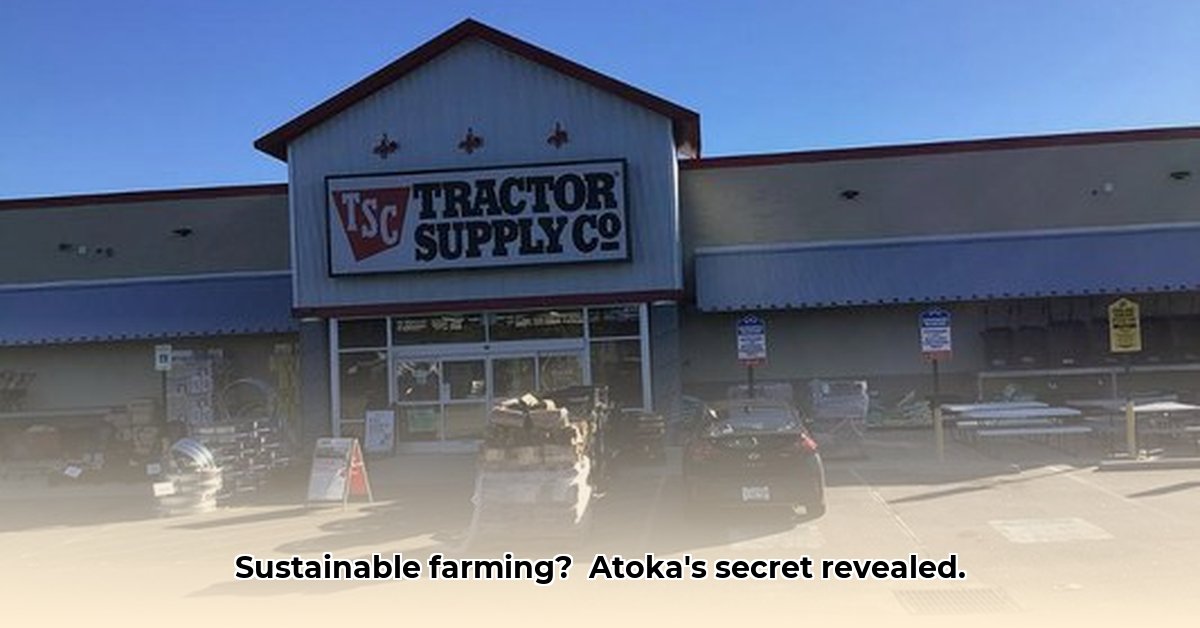
Tractor Supply Company (TSC) in Atoka, Oklahoma, represents a significant resource for local farmers. Its accessibility and product range could significantly impact the adoption of sustainable agricultural practices. However, a comprehensive evaluation of TSC's role requires a detailed analysis of its product offerings, farmer outreach, and potential collaborations with local stakeholders. This guide examines the opportunities and challenges in promoting sustainable farming through TSC's Atoka location. For more information on TSC's commitment to sustainable practices, please visit this helpful resource.
Tractor Supply Atoka's Reach and Accessibility
TSC's Atoka store enjoys a central location, providing convenient access for farmers in Atoka and surrounding communities including Lehigh, Lane, Caney, and Stringtown. This accessibility is crucial for farmers, particularly smaller operations, who may lack the resources for extensive travel to obtain necessary supplies. This readily available access to agricultural inputs forms a strong basis for promoting sustainable practices. However, convenient location alone does not guarantee the availability of sustainable alternatives.
Sustainable Product Availability: A Critical Assessment
Currently, information on the range and proportion of sustainable products offered at the Atoka TSC store is limited. While TSC stocks conventional farming products, the availability of organic seeds, water-efficient irrigation equipment, and natural pest control methods requires further investigation. A lack of publicly available data on product sourcing and sustainability certifications hinders an accurate assessment of their overall contribution to sustainable farming practices in the Atoka region. Further research is crucial to determine the balance between conventional and sustainable options within their inventory. Isn't it important for transparency to know precisely what a retailer is offering farmers?
Challenges and Opportunities: Cultivating Sustainable Practices
Farmers in Atoka face common challenges: limited access to appropriate resources, lack of knowledge of best practices, and difficulties finding profitable markets for sustainably produced goods. TSC has the potential to address these challenges by:
- Expanding Sustainable Product Offerings: Stocking a broader range of organic seeds, water-efficient irrigation systems, and bio-based pest control options would directly support sustainable farming practices.
- Improving Information Access: Providing educational resources, workshops, and in-store information detailing sustainable agricultural techniques would empower farmers to make informed choices.
- Facilitating Community Engagement: Creating a platform for farmer-to-farmer knowledge sharing and connecting farmers with relevant support organizations would foster a stronger local network actively committed to sustainable agriculture.
Actionable Steps for a Greener Future
A collaborative approach is essential for advancing sustainable agriculture in Atoka. The following actions are recommended for various stakeholders:
Tractor Supply Atoka: Conduct a comprehensive inventory review, focusing on sustainable product categories. Survey local farmers to assess their needs and preferences. Develop a dedicated section for sustainable products within the store. Establish partnerships with local sustainable agriculture organizations. Improve supply chain transparency and sustainability certifications for their products.
Local Farmers: Evaluate the availability of sustainable products at Tractor Supply Atoka. Explore additional sustainable suppliers. Invest in water conservation techniques and implement soil health improvement practices. Consider participating in Community Supported Agriculture (CSA) initiatives or joining local farmer cooperatives.
Local Government: Offer financial incentives (grants, tax breaks) for sustainable farming practices. Invest in educational programs and workshops promoting sustainable agriculture methods. Develop policies that support the adoption of environmentally friendly agricultural practices and infrastructure.
Risk Assessment: Addressing Potential Obstacles
Adopting sustainable farming practices involves inherent risks. A proactive approach can effectively mitigate these risks:
| Risk Factor | Likelihood | Impact | Mitigation Strategy |
|---|---|---|---|
| Limited sustainable product availability | Medium | Medium | TSC expands product range; Collaborates with local and regional suppliers; Conducts market research to gauge demand. |
| Lack of farmer awareness of sustainable options | High | Medium | TSC collaborates with government agencies to organize educational workshops and information sessions. |
| Supply chain's environmental impact | Medium | High | TSC works with suppliers to reduce carbon footprint using sustainable packaging and delivery methods. |
| Competition from other retailers | Medium | Low | TSC differentiates through superior customer service, community engagement, and access to unique sustainable products. |
| Changes in regulations | Low | High | Proactive monitoring of evolving regulations; Adapting product offerings and farmer services accordingly. |
Building a Sustainable Future Together
The success of sustainable agriculture in Atoka depends on the concerted efforts of Tractor Supply, local farmers, and the government. TSC's central role necessitates proactive engagement and transparency to build trust and effective collaboration. Ongoing research, open communication, and a commitment to continuous improvement are crucial to creating a resilient and environmentally friendly agricultural system for Atoka. This cooperative approach can become a model for other rural communities seeking to embrace sustainable farming practices.